
Geimori / Coffee Journal
Caffeine numbers and TDS both depend on serving size and brewing. Neither one makes coffee or tea universally “stronger.”
Coffee and tea: caffeine is not one fixed number
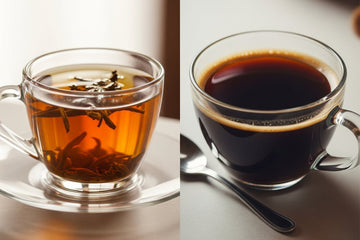
A beverage’s caffeine depends on the plant material, processing, dose, steeping or extraction and final serving size. A typical mug of coffee often contains more caffeine than the same volume of brewed black or green tea, but there is substantial overlap.
The U.S. FDA lists typical 12-ounce examples of regular brewed coffee and black or green tea with widely varying caffeine values. Use package information or published laboratory data for a particular product whenever possible.
Useful comparisons, with caveats
| Drink | Common misconception | What to compare instead |
|---|---|---|
| Espresso | Small means very little caffeine | Count shots and the amount of coffee used. |
| Filter coffee | One mug always equals one espresso shot | Measure beverage size and the brewing dose. |
| Black or green tea | All tea contains very little caffeine | Consider leaf quantity, steep time and drink size. |
| Matcha | Same as steeped green tea | You consume suspended powdered leaves, so preparation differs. |
TDS is not a caffeine reading
Total dissolved solids (TDS) describes the concentration of dissolved material in a beverage. In coffee, a refractometer may be used to estimate coffee solubles. The reading includes many compounds beyond caffeine. Two drinks can show a similar TDS value while containing different amounts of caffeine or tasting very different.
A simple water-quality TDS meter and a beverage refractometer are not interchangeable instruments. Avoid quoting “tea TDS versus coffee TDS” as a universal taste ranking.
A better tasting test
- Prepare the coffee and tea the way you normally drink them.
- Write down dose, water amount, brew time and served volume.
- Note flavor and perceived body separately from caffeine estimates.
- Avoid using bitterness as a substitute for caffeine content.
Choose based on taste and sensitivity
If you are caffeine-sensitive, think about all sources consumed across the day. The FDA notes that up to 400 mg daily is not generally associated with negative effects for most healthy adults, but individual limits vary. Coffee and tea both offer wide flavor ranges beyond their stimulant content.


