
Wirsh Coffee Journal · Practical Guide
A bottomless portafilter can reveal what is happening under your espresso basket. It can help you spot spraying and uneven flow—but it is a diagnostic tool, not an automatic upgrade in cup quality.
What is a bottomless portafilter?
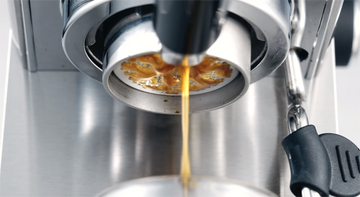
A bottomless (or naked) portafilter removes the spouts beneath the basket. Espresso flows directly from the basket into your cup, so you can see the initial droplets, stream shape and any sideways spray.
What it can—and cannot—tell you
| You see | Possible explanation | What to try |
|---|---|---|
| Sideways sprays | Uneven flow or puck-prep problems | Check distribution, tamp level, dose and grind |
| A centered stream | Flow appears more even | Still taste the shot; looks alone do not prove extraction quality |
| Slow drips or choking | Flow resistance is high | Try a slightly coarser grind or review basket dose |
| Fast pale stream | Low resistance and a different extraction pattern | Check grind, yield and taste before deciding |
Three mistakes that make bottomless shots messy
- Using the wrong basket: basket diameter, depth and design must match the machine and portafilter. A 51 mm accessory is not interchangeable with a 58 mm one.
- Tamping unevenly: a level, repeatable tamp matters more than chasing extreme force.
- Changing everything at once: if the shot sprays, change one puck-prep variable and observe again.
For a side-by-side look at everyday workflows, read our dual-spout vs. bottomless guide. If you're seeing obvious jets, our channeling troubleshooting article is the next stop.
Do you need one?
No. A conventional dual-spout portafilter can make excellent espresso, and it is often cleaner and more convenient. Choose bottomless if you want visual feedback while learning to dial in. Keep the basket and cleaning routine in mind when comparing options.


