

GRINDER BUYING GUIDE
If you mostly make lattes, you do not need to buy the most expensive espresso grinder you can afford. You need one that can dial in a good shot repeatedly, handle the beans you actually drink, and fit the way you make coffee before work. Milk changes what you notice in the cup. It does not make the grinder irrelevant.
The interesting question is not "Which grinder is best for espresso?" It is "Which grinder makes the espresso I like after I add milk?" Those are not always the same purchase.

Start with the drink, not the burr diameter
A short cortado leaves a lot of the espresso character exposed. A big iced latte with syrup does not. If you drink mostly medium or dark roasts with milk, sweetness, body, and repeatability may matter more to you than chasing every floral note. If you drink lightly roasted coffee in a small flat white, you might care more about separating those flavors.
There is no rule that conical burrs always make thick espresso or flat burrs always make thin espresso. Burr geometry, alignment, grind setting, coffee and recipe all contribute. Treat those flavor labels as tendencies people discuss, not guarantees.
Find the Right GrinderCompare Grinder Types
The three things I would pay for first
1. Fine adjustment that actually lets you dial in
Milk can cover some rough edges, but it cannot rescue every under-extracted shot. If your espresso gushes in seconds or stalls completely, a more expensive burr set is not the first fix. You need a grinder with espresso-capable adjustment and a repeatable recipe. Start with a dose and yield you can reproduce, then adjust the grind based on flow and taste. Our espresso grind-size guide walks through the process.
2. A workflow that matches the number of drinks
Two milk drinks every morning means two doses, two shots, milk preparation, and cleanup. If you change beans often, a single-dose grinder can be convenient. If you make several drinks from the same bag every day, a hopper and timed or weight-based dosing may be less fiddly. Single dosing is not automatically the winner.
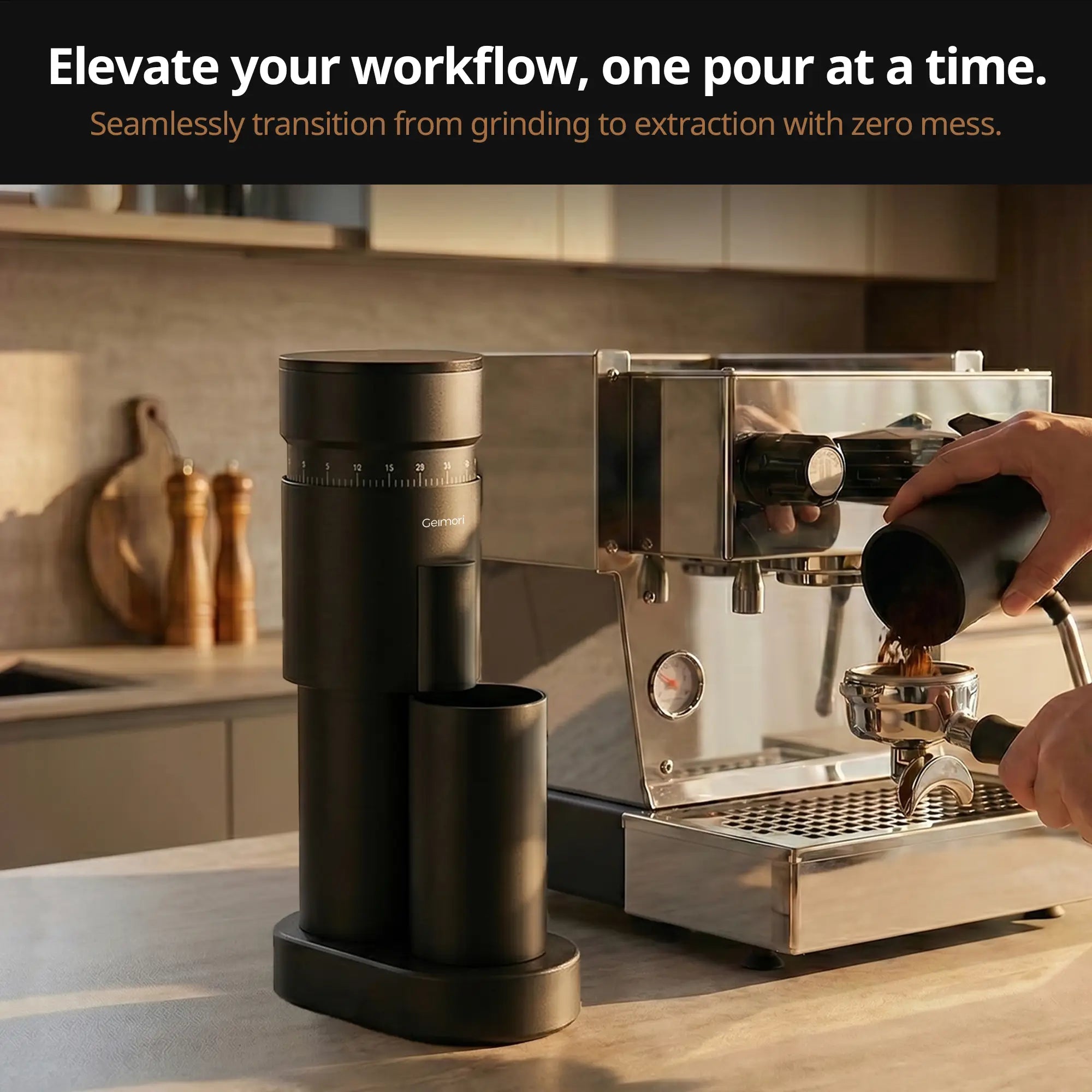
3. Less mess, fewer surprises
Static, grounds sticking in the chute, and coffee left from the previous dose can be more irritating than a tiny theoretical change in flavor. Check how the grinder cleans, how easy it is to return to a setting, and whether its dosing workflow suits your portafilter. Our static and anti-static explainer covers why the mess happens.
Does a conical or flat burr make more sense for lattes?
If your favorite latte is chocolatey, nutty and fairly rich, a conical-burr grinder is a reasonable place to start. If you enjoy brighter coffees and want to notice more of their character through a smaller milk drink, a flat-burr option may be worth comparing. Neither is a universal rule, and changing the beans or espresso-to-milk ratio can make a bigger difference than switching burr formats.
One useful reality check: make your usual drink with less milk once. If you suddenly notice the espresso much more clearly, your current ratio may be masking the flavors you hoped a new grinder would reveal.
When is an upgrade actually worth it?
Imagine you already own a grinder that can dial in espresso and your lattes taste good. Would you notice a new grinder? Maybe. But if your main complaint is that your milk drinks taste weak, first check your coffee dose, espresso yield, roast, and milk volume. A shorter yield or smaller drink can change the result without buying anything.
An upgrade makes more sense when your current grinder has coarse adjustment steps, produces inconsistent shots despite a controlled recipe, is painful to use for back-to-back drinks, or leaves so much coffee behind that dialing in becomes a guessing game.
That distinction comes up in real discussions. Some home baristas making mostly milk drinks want more body, while others are simply tired of their old grinder's adjustment or hopper workflow. They are not shopping for the same solution.
Where Geimori fits - and where it might not
The Geimori GU63 is a 63mm conical-burr, 80 RPM, stepless single-dose grinder intended for espresso and filter coffee. It is worth a look if you want to weigh each dose, switch beans, and make a couple of espresso-based drinks at home. Those specifications do not prove it will make your preferred latte taste better than another grinder.
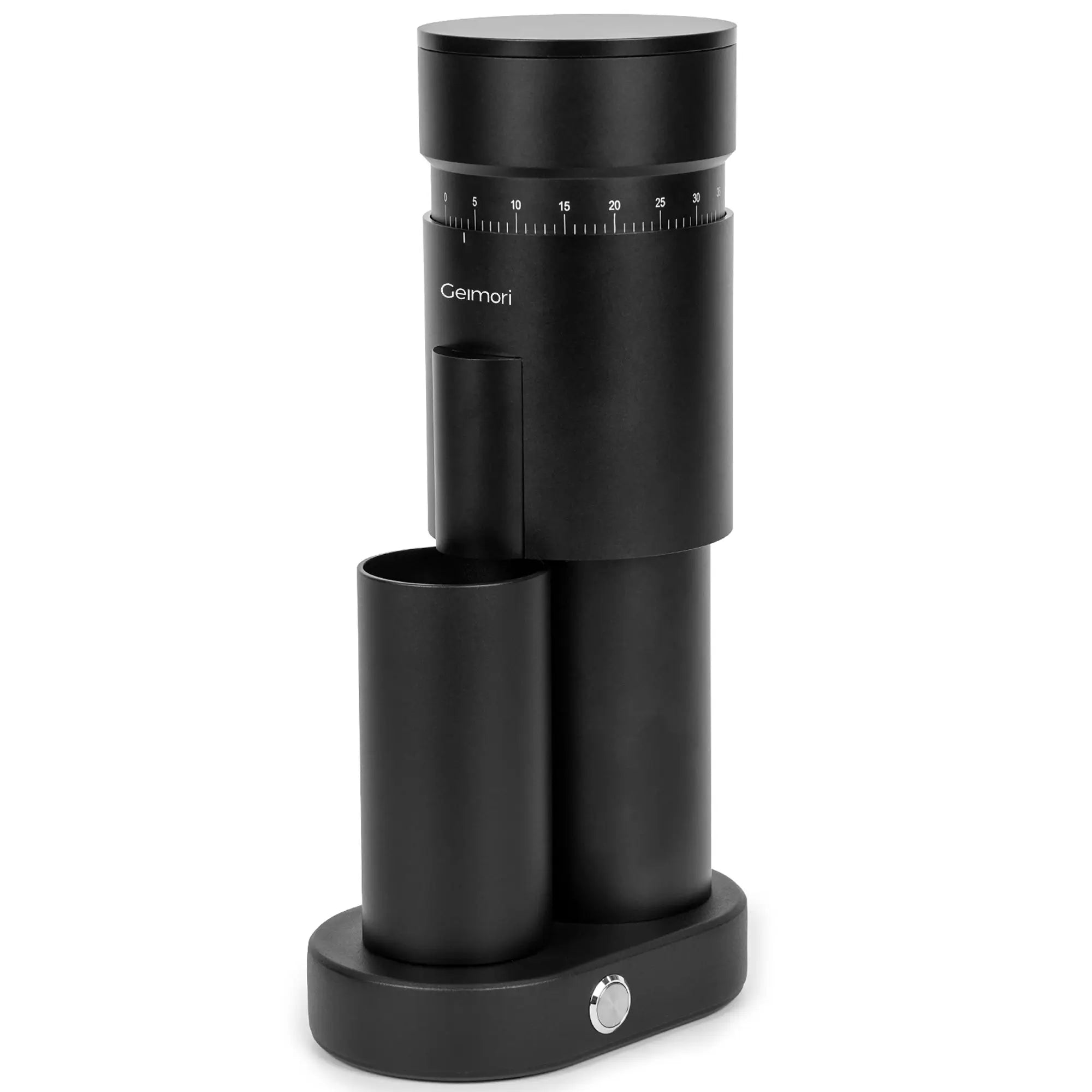
The tradeoff is the single-dose routine. If you make six milk drinks in a row and want a full hopper with automatic dosing, the GU63 may not be your easiest workflow. It also needs regular cleaning, and actual retention can vary; owner feedback on the product page is mixed on how closely real-world results match low-retention claims.
If you would rather explore flat burrs and adjustable speed, compare the Geimori grinder lineup before deciding. Burr size and RPM alone do not tell you how a latte will taste.
A quick decision checklist
- Mostly big flavored lattes? Fix your recipe and workflow before paying for nuanced burr differences.
- Mostly cortados and flat whites? Taste differences in espresso may be easier to notice.
- Making one or two drinks and changing beans? Single dosing can fit well.
- Making many drinks from the same beans? Consider a hopper-based workflow.
- Already happy with your espresso? You may not need an upgrade at all.
FAQ
Do I need an expensive grinder for lattes?
No. You need an espresso-capable grinder with enough adjustment and consistency for your machine and coffee. A higher price is not a guarantee of a better milk drink.
Is a conical burr better for milk drinks?
Not universally. Some drinkers like the body associated with certain conical-burr designs, but burr geometry and coffee choice matter more than the flat-versus-conical label alone.
Will milk hide a bad espresso shot?
Milk can soften harshness and dilute acidity, but a very weak, sour or bitter shot can still make a disappointing latte.
Should I buy a single-dose grinder for two lattes a day?
It can be a good fit if you like weighing beans or switching coffees. If you want fast, repeatable doses from one bag, a hopper grinder may be easier.
What should I try before upgrading my grinder?
Change one variable at a time: dose, yield, grind setting, roast, or milk volume. If you can identify what is missing, it becomes much easier to choose equipment that solves it.
The bottom line
For milk drinks, buy the grinder that makes your preferred espresso repeatable and your morning easier. Do not spend hundreds chasing flavor separation you may not notice under a large pour of milk. If the espresso is already good and the routine works, you can call it a day.
See the GU63Compare Geimori Grinders
Editorial note: This guide is written by Geimori, a coffee grinder brand operated by Wirsh. Product examples from our lineup are not independent third-party reviews.


