

KÜLSŐ ÉRTÉKELÉST MAGYARÁZÓ ÚTMUTATÓ
GU38 vs GU63 vs T38 Plus: Mit tudhatunk meg ebből a külső értékelésből?
Külső értékeléssel kapcsolatos megjegyzés: Ez a Dimitris Dimopoulos által, az EDC Coffee csatornán készített összehasonlító videó független szerkesztői értelmezése; a tesztelőnek nincs ismert kapcsolata a Geimorival. A videó a valós használaton alapuló összehasonlítási szempontot adja, az aktuális Geimori-termékoldalak pedig a műszaki specifikációkat biztosítják. A Geimori nem készítette és nem szponzorálta az értékelést.
Nézd meg Dimitris Dimopoulos értékelését

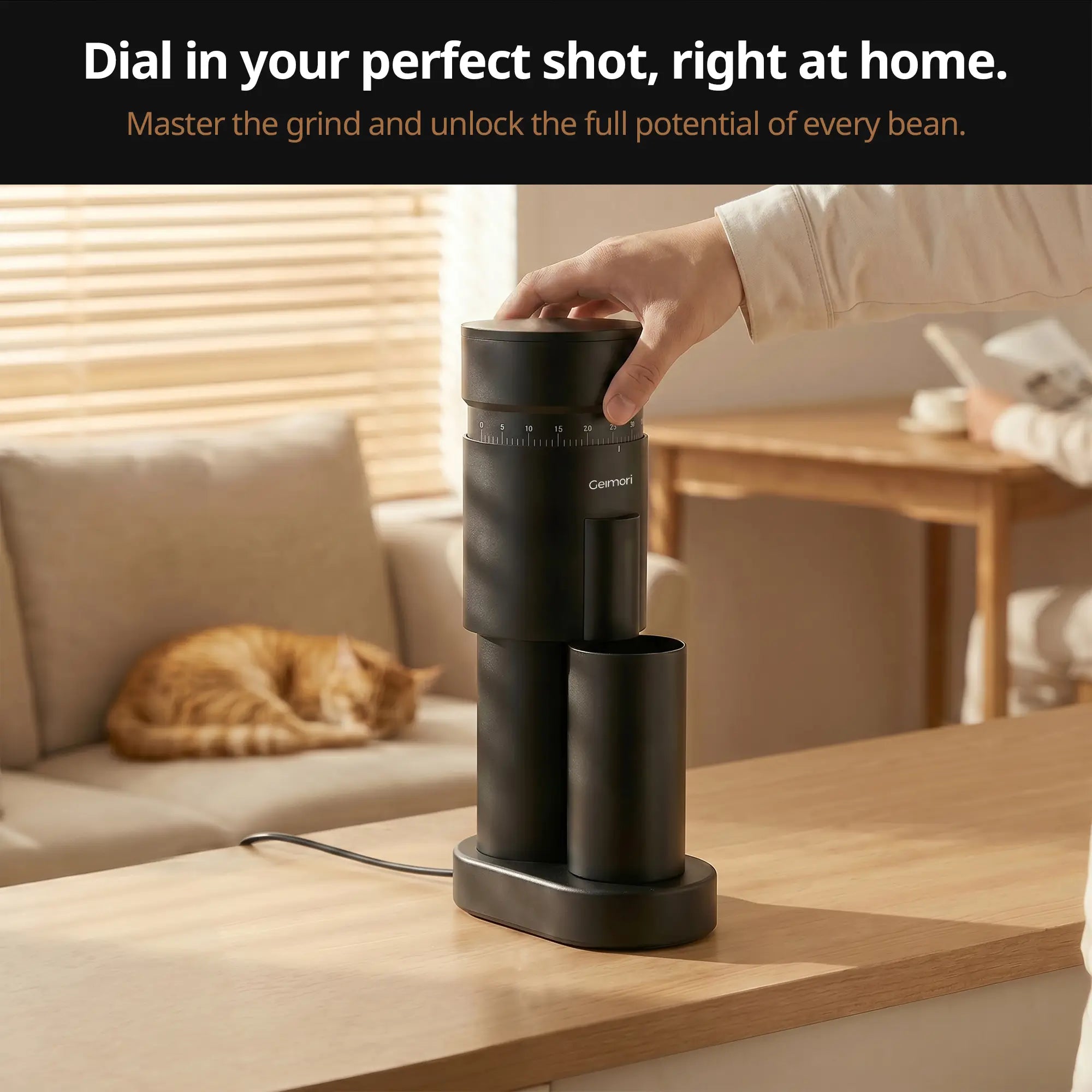

Hivatalos Geimori-termékképek. A gyakorlati értékelési kontextust továbbra is a külső videó biztosítja.
Az értékelés egy percben
| Ha ez jellemző rád | Kezdd ezzel |
|---|---|
| Kis konyha, irodai összeállítás vagy kompakt, csatlakoztatható munkafolyamat | T38 Plus |
| Szűrős kávékészítés elsősorban, alkalmi eszpresszó és karcsú fémház | GU38 |
| Nagyobb kúpos őrlőkések, rugalmasabb durvaőrlési tartomány és nagyobb adagok | GU63 |
Az aktuális árért, elérhetőségért és piacspecifikus szállítási információkért ellenőrizd az egyes aktuális termékoldalakat.
Mire hasznos a videó
A videó leginkább vásárlói szemszögű összehasonlításként hasznos. Az őrlők egymás mellé állításával Dimitris a munkafolyamat, a helyigény, az őrlemény kezelése és a fizikai kialakítás közötti különbségeket könnyebben érthetővé teszi, mint egy specifikációs adatlap.
Ez azért fontos, mert az őrlővásárlók nem a specifikációkkal élnek együtt, hanem minden reggel a géppel. A pulton elfoglalt hely, az adagolási rutin, a tisztítás, a beállítás és az, hogy az őrlő mennyire könnyen illeszthető egy kávés összeállításba, legalább annyira számíthat, mint a kiemelt őrlőkésméret.
Nem ez a forrás minden adat végső igazolása. A termékváltozatok, a regionális listázások és a hardververziók változhatnak. Ezért az alábbi adatokat a hivatalos termékoldalak alapján ellenőrizzük.
Használd mindkét forrást: nézd meg a tesztelő gyakorlati tapasztalatait, majd a hivatalos oldalakon ellenőrizd a ténylegesen megvásárolni kívánt modell konfigurációját.
Hogyan olvasd ezt a külső értékelést
Dimitris videója leginkább döntést segítő eszközként értékes, nem pedig a termék kézikönyvének helyettesítőjeként. Egy bemutató készítője megmutathatja, milyen érzés az őrlőt a pulton használni, mennyi helyet foglal, és mely kompromisszumok válnak nyilvánvalóvá használat közben. A hivatalos termékoldalak ezt követően megerősíthetik az adott modell és piac őrlőkésének típusát, motorját, kapacitását, méreteit és tápellátási követelményeit. Látogass el Dimitris Dimopoulos EDC Coffee csatornájára, ahol további értékeléseket találsz.
Ez a különbségtétel azért fontos, mert a bemutató készítőjének preferenciája személyes. Egy kompakt őrlő ideális lehet az egyik konyhában, míg a másikban bosszantó; egy nagyobb adagoló hasznos lehet egy nagyobb adagokat készítő filterkávézó számára, de nem ad értéket annak, aki egyszerre egy eszpresszóadagot mér ki.
| Mire hívja fel a figyelmet a videó | Mit érdemes ellenőrizni vásárlás előtt |
|---|---|
| A pulton elfoglalt hely és a fizikai arányok | A hivatalos termékoldalon szereplő jelenlegi méretek és tömeg |
| Milyen érzés a munkafolyamat a pulton | Az adagoló, az adagolócsésze és a terhelhetőség specifikációi |
| Az őrlemény kezelése és a tisztításra fordított figyelem | Modellspecifikus tisztítási útmutató és a mellékelt tartozékok |
| Melyik modell illik a bemutató készítőjének rutinjához | Az elkészítési módok, az adag mérete és a rendelkezésre álló hálózati csatlakozó |
Nem az a hasznos kérdés, hogy „Melyik őrlő nyeri a videót?” Hanem az, hogy „Melyik őrlő illik ahhoz a kávéhoz, amelyet készítek, és ahogyan készítem?”
Mit jelent az őrlőkés különbsége - és mit nem
Az egyik hardverbeli különbség azonnal egyértelmű. A GU38 és a T38 Plus 38 mm-es, hatmagos kúpos őrlőkést használ, míg a GU63 egy 63 mm-es, nyolcmagos kúpos platformra vált.
Ez hasznos információ, de önmagában az őrlőkés átmérője alapján nem érdemes dönteni a vásárlásról. A gyakorlatiasabb kérdés az, hogy mi jár az egyes platformokkal: a beállítási tartomány, a kapacitás, az őrlési sebesség, a fizikai méret és az, hogy az őrlő hogyan illeszkedik a mindennapi rutinba.
A jelenlegi GU63 termékoldal 100 W-os, 80 RPM-es DC-motort, 0–85-ig jelölt fokozatmentes beállítási tartományt, 60 g-os adagolót és 70 g-os adagolócsészét ad meg. A GU38 és a T38 Plus kisebb, 38 mm-es kúpos őrlőkés-platformot használ kompaktabb kialakításban.
Ezek mérhető tervezési különbségek - nem bizonyítják, hogy az egyik őrlő minden kávéval jobb ízű eredményt ad. A kávé, a pörkölési szint, a recept, a kalibrálás és az egyéni ízlés mind befolyásolja, mi kerül a csészébe.
A jelenlegi specifikációk összehasonlítása
| T38 Plus | GU38 | GU63 | |
|---|---|---|---|
| Őrlőkés-platform | 38 mm-es, hatmagos kúpos | 38 mm-es, hatmagos kúpos | 63 mm-es, nyolcmagos kúpos |
| Beállítás | Fokozatmentes, 0–65 jelöléssel | Fokozatmentes, a jelenlegi oldalon 0–5 jelöléssel | Fokozatmentes, 0–85 jelöléssel |
| Motor | 80 W DC · 170 RPM | 80 W DC · 170 RPM | 100 W DC · 80 RPM |
| Őrlési sebesség | Eszpresszó 0,6 g/s; filter 0,84 g/s | Eszpresszó 0,6 g/s; filter 0,8 g/s | Eszpresszó 0,6 g/s; filter 1,1 g/s |
| Adagoló / csésze | 30 g / 35 g | 30 g / 40 g | 60 g / 70 g |
| Méretek / tömeg | 70 × 101 × 234 mm / 1,234 g | 162 × 90 × 317 mm / 2,375 g | 155 × 98 × 305 mm / 3,068 g |
A specifikációkat az aktuális termékoldalak alapján ellenőriztük. A visszamaradás, a zaj és az őrlési teljesítmény a kávétól, az adagtól, a kalibrációtól és a használati módszertől függ.
Használd az értékelést kiindulópontként
Nézd meg a gyakorlati összehasonlítást, majd ellenőrizd, melyik modell illik a pultodhoz.
Dimitris videója a független nézőpontot adja. A hivatalos összehasonlítási útmutató bemutatja az aktuális termékkörnyezetet.
Nézd meg az értékelést Hasonlítsd össze a hivatalos specifikációkatAmit az értékelés feltár a mindennapi használatról
Ez lehet az egymás melletti értékelés leghasznosabb része. A specifikációkat papíron könnyű összehasonlítani; a munkafolyamatot nehezebb megérteni, amíg nem látod, hogy a gépek ugyanazon a munkapulton foglalnak helyet, és ugyanazt az alapfeladatot végzik.

T38 Plus: kompakt, hálózatról működő őrlés
A T38 Plus a három közül a legkisebb és legkönnyebb. A 234 mm-es magasság és az 1 234 g-os tömeg alkalmassá teszi kis pultra, irodai állomásra vagy rendszeresen mozgatott összeállításhoz. Hálózatról működik, így a hordozhatóság itt kompakt méretet és könnyű áthelyezhetőséget jelent - nem vezeték nélküli működést.
GU38: karcsú, mindennapi őrlő
A GU38 egy magasabb, nehezebb, egyszeri adagolású őrlő karcsú, 3,5 hüvelykes házzal. A jelenlegi oldal elsősorban filterkávéhoz és alkalmi eszpresszóhoz ajánlja, 38 mm-es, hatmagos kúpos őrlőtárcsákkal, fokozatmentes állítással és minimális visszamaradással működő munkafolyamattal.
GU63: a nagyobb kúpos őrlőtárcsás platform
A GU63 63 mm-es, nyolcmagos kúpos őrlőtárcsákat, 80 RPM-es motort, 60 g-os tartályt, 70 g-os adagolópoharat és 0-85-ös állítási skálát kombinál. A kompromisszum fizikai: a 3 068 g-os tömeg és a 305 mm-es magasság több helyet foglal a pulton, és kevésbé kényelmessé teszi az őrlő mozgatását, mint a kisebb T38 Plus esetében.
Egy dologban a videó nem dönthet helyetted: az ízlésben
A gyakorlati összehasonlítás megmutathatja a méretet, a munkafolyamatot, a felépítést és a gyakorlati különbségeket. Azt azonban nem tudja automatikusan megmondani, melyik őrlővel készül olyan csészeprofil, amelyet te részesítesz előnyben.
A kávéfogyasztók sokféle szempontot helyezhetnek előtérbe: testességet és textúrát, tisztaságot és az ízek elkülönülését, hagyományos eszpresszót, világos pörkölésű eszpresszót, filterkávét, tejes italokat vagy a többféle elkészítési módszer közötti sokoldalúságot.
Ezért hasznosabb ez az értékelés döntéstámogatóként, mint univerzális rangsorként. Használja Dimitris valós tapasztalatait a gépek megismeréséhez, a specifikációk ellenőrzéséhez tekintse át a jelenlegi termékoldalakat, majd igazítsa a döntést ahhoz a kávéhoz, amelyet ténylegesen fogyaszt.
Hasznos vásárlási sorrend: kávé és elkészítési mód → előnyben részesített munkafolyamat → gyakorlati korlátok → műszaki jellemzők.
Melyikkel érdemes először megismerkednie?
- T38 Plus: akkor válassza, ha kompakt, stabil, hálózatról működő őrlésre van szüksége.
- GU38: akkor válassza, ha karcsú, fémházas, mindennapos őrlőt keres szűrőkávéhoz és alkalmi eszpresszóhoz.
- GU63: akkor válassza, ha nagyobb kúpos őrlőkés-platformra, nagyobb adagkapacitásra és nagyobb tartalékra van szüksége a durvább őrlési tartományban.
Ha vezeték nélküli kávékészítésre van szüksége, hasonlítsa össze az akkumulátoros Geimori T38-at. Ha a síktárcsás őrlés az elsődleges, hasonlítsa össze a GU64 Gen2-t.
Bármelyik modellel kezdi is, ne értelmezze a fenti listát legjobbtól legrosszabbig tartó rangsorként. A külső összehasonlítás célja, hogy láthatóvá tegye a kompromisszumokat, így összevetheti őket saját rutinjával.
Gyakran ismételt kérdések
Ugyanaz az őrlő a GU38 és a T38 Plus?
Ugyanazt a feltüntetett, 38 mm-es, hatmagos kúpos őrlőkés-platformot és 170 RPM-es motort használják, de a burkolatuk, méreteik, talpkialakításuk és munkafolyamatuk eltér. Tekintse őket rokon modelleknek, ne felcserélhető termékeknek.
Gyorsabb a GU63 eszpresszóhoz?
A jelenlegi GU63 termékoldala 0,6 g/s értéket ad meg eszpresszóhoz, ugyanazt a feltüntetett sebességet, mint a GU38 és a T38 Plus esetében. Előnyei a nagyobb őrlőkéstartó-platform, a nagyobb kapacitás és a szűrőkávéhoz megadott sebesség - nem pedig egy ígért eszpresszó-őrlési sebességelőny.
Vezeték nélküli a T38 Plus?
Nem. A T38 Plus hálózati AC–DC adaptert használ. Vezeték nélküli kávékészítéshez hasonlítsa össze az akkumulátoros T38-cal.
Működnek az őrlők különböző hálózati feszültségekkel?
A jelenlegi termékoldalak 100–240 V-os, 50/60 Hz-es adapterbemenetet tüntetnek fel. Előfordulhat, hogy a célországban található aljzathoz régiókompatibilis csatlakozófejre is szükség van.
Készen áll az összehasonlításra? Kezdje azzal a kávéval, amelyet a leggyakrabban készít, majd vegye figyelembe a munkafolyamatot, a pulton rendelkezésre álló helyet, a tápellátás formátumát és az ezeket az igényeket kiszolgáló műszaki jellemzőket.
Tekintse meg a Geimori kollekciót Nézze meg Dimitris értékelését


